You don't have to memorize which standard applies
Water follows S500, fire follows S700, mold follows S520 — Orva already knows which one fits this job and builds the report around it, so your team doesn't have to.

Every water, fire, and mold report Orva generates follows the same IICRC-based logic your carriers and adjusters already recognize — tracked room by room, verified against target conditions, and rolled up across your entire portfolio.
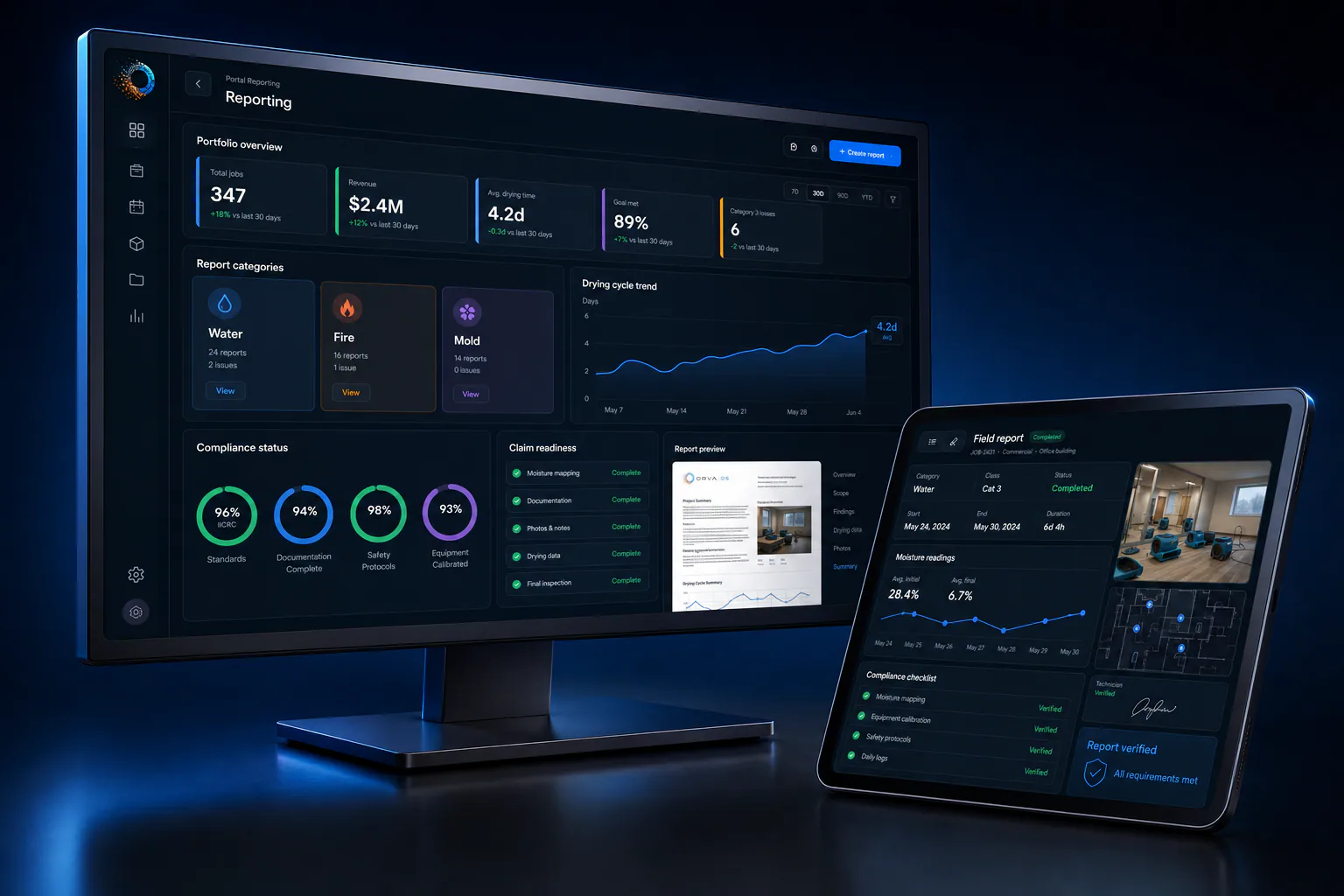
IICRC standards exist to protect the work, the customer, and the claim — but a binder on a shelf doesn't help anyone in the middle of a job. Orva builds that logic into the workflow itself, so it shapes the job while it's happening instead of getting cited after the fact.
✓ After an adjuster dispute
✓ During a supplement disagreement
✓ When documentation is already being challenged
✓ After a failed drying outcome
✓ During a legal exposure review
✓ Every reading, cycle, and test tracked against the standard as it happens
✓ Documentation gaps flagged before they become disputes
✓ Consistent reports regardless of which technician worked the job
✓ Stronger position in carrier negotiations, because the record was built right the first time
Water follows S500, fire follows S700, mold follows S520 — Orva already knows which one fits this job and builds the report around it, so your team doesn't have to.
Readings, cycles, and tests are measured against their real completion goal — and drying, clearance, and closeout statements only go out once every condition has genuinely been met.
Missing photos, readings, or containment documentation are flagged during the job — not discovered during a carrier dispute six months later.
Drying cycle time, salvage rate, and clearance pass rate roll up by loss type across your whole portfolio — not buried in individual job files.
The fields aren't generic — they follow the documentation logic restoration professionals already use in the field and carriers already expect to see.
✓ Category & class documented per room
✓ Moisture readings logged against target, not just recorded
✓ Equipment placement & removal timestamps
✓ Certification withheld until dry standard is verified
✓ Burn type & soot/smoke damage by surface
✓ Odor treatment cycles tracked to completion
✓ Content triage: restorable vs. total loss
✓ Clearance sign-off required before closeout
✓ Containment type & negative air documented
✓ Pre- and post-remediation air sample results
✓ Root moisture source correction confirmed
✓ Third-party clearance pass required to close
Orva continuously checks job activity against the applicable standard and surfaces what's missing while there's still time to close the gap — not after a carrier already has doubts.
Flagged automatically the moment documentation lapses during an active drying period — before a carrier ever has to ask where the gap is.
Mold and Category 3 water jobs get flagged if containment setup or PPE verification is missing from the record, not discovered after the fact.
Contamination-level jobs are checked against required safety and containment documentation automatically, every time.
Gaps in the drying trend are surfaced while the job is still open, so the record supports the outcome instead of raising questions about it.
Orva doesn't just store what happened on a job. It evaluates how well the work was documented against the applicable standard, then uses that same record to help you justify supplements and respond to carrier pushback — instead of starting the argument from scratch every time.
Strong documentation with minimal gaps — supports full supplement value without dispute.
Solid record with one missing signature — flagged immediately, not discovered during a later review.
Containment photos incomplete — flagged for technician follow-up before the job closes, not after.
See how connected workflows create clearer operations and better outcomes.